


The Sciatica Connection
The Sciatica Connection
This course aims to deliver a detailed, complete, global, and modern approach to understanding Sciatica.
Couldn't load pickup availability

Venue
-
Portland, OR
June 6-7, 2026
8:00 - 5:00 (subject to change)Venue: TBD

Description
This two-day interactive course explores the anatomy, assessment, and functional management of sciatica through a movement-based, anatomy-driven approach. Participants will learn to differentiate between radiculopathy, neuropathy, and sclerotome pain using orthopedic and neurological testing, and apply Dooley’s Clinical Auditing Process to identify and treat the true sources of dysfunction. The course integrates corrective exercises, neural flossing, and breathing strategies to restore mobility, stability, and motor control, empowering clinicians and movement professionals to optimize outcomes for patients with sciatic pain.
"Kathy was one of the best instructors I have had. You could tell how passionate she was about the material and it made for a great weekend."

Objectives
- Functional anatomy overview of the lumbar spine and lumbosacral plexus of nerves.
- Review of the pathway of the sciatic nerve, including its most common impingement sites.
- Description of the most common causes of sciatica.
- Distinguishing the types of sciatica (i.e. dermatome vs. sclerotome vs peripheral neuropathy)
- Demonstration of common orthopedic and functional tests for sciatica.
- Corrective exercise strategies for preventing and ameliorating sciatica, including nerve floss pendulums.
- Nutritional discussion on minimizing chemical receptive components of sciatica exacerbations.
- Educational strategies for implementation into home, fitness, and clinical practice
- Provide a safe, fun, collegial learning environment to discuss this challenging yet important anatomical region
- Case study demonstration
- Group discussion with plenty of time for Q&A


"She was so amazing. Great energy, insightful clinical pearls, and lots of information given in a very digestible way. I cannot recommend her enough"
The Outline
Day 1
9:00 - 9:30 Introduction & Course Overview
- Instructor/participant introductions
- Course objectives and outcomes
- Overview of sciatica: definitions and fast facts
9:30 - 11:00 Functional Anatomy Review
- Lumbar spine and intervertebral disc anatomy
- Lumbosacral plexus and sciatic nerve formation
- Sciatic nerve pathway and sensory/motor distribution
- Common entrapment sites and anatomical variations
11:00 - 12:00 Mechanisms & Causes of Sciatica
- Common causes: disc herniation, stenosis, trauma, piriformis syndrome, etc.
- Differentiating radiculopathy, neuropathy, and sclerotome pain
- Pathophysiology and loss of intrinsic stabilization
12:00 - 1:00 Lunch Break
1:00 - 2:30 Neurological Assessment & Testing
- MRS (Muscle, Reflex, Sensory) testing for L4–S3
- Dermatome, myotome, and sclerotome mapping
- Deep tendon reflex review and interpretation
2:30 - 4:00 Orthopedic Testing Foundations
- Step-by-step review and demos:
- ASLR with Braggard’s & Neri’s signs
- Bowstring test
- Kemp’s test
- Slump test
- FAIR (FADIR) test
- Cluster of Laslett
- Differentiating findings for radiculopathy vs. neuropathy vs. sclerotome referral
Day 2
9:00 - 10:30 Clinical Reasoning & Case Study
- Case study review: Dr. Dooley’s L5-S1 example
- Analyzing findings and forming differential diagnosis
- Clinical auditing process introduction
10:30 - 12:00 Dooley’s Clinical Auditing Process
- Four key assessment components:
- Tightest structures
- Chief complaint correlations
- Dysfunctional movement exam
- Clinical pearls integration
- Application demo and small-group practice
12:00 - 1:00 Lunch Break
1:00 - 3:00 Corrective Strategies & Exercise Integration
- Pendulum approach and proprioceptive retraining
- Nerve flossing techniques: seated, side-lying, and standing
- Supine and prone 90/90 breathing with ID cues
- Modified superman, hanging, SLDL, and kneeling balance drills
- Applying “short then long” strategy for tone normalization
3:00 - 3:45 Lifestyle and Nutritional Strategies
- Anti-inflammatory nutrition and supplements (turmeric, boswellia, etc.)
- Red light therapy, fasting, and exercise/rest balance
- Avoidance of aggravating factors (prolonged sitting, loaded flexion, etc.)
3:45 - 4:00 Integration, Q&A, and Wrap-Up
- Review of key concepts and clinical takeaways
- Participant discussion and troubleshooting
- Post-course resources and follow-up links
Check out The TMJ Connection with Dr. Kathy Dooley
Instructor

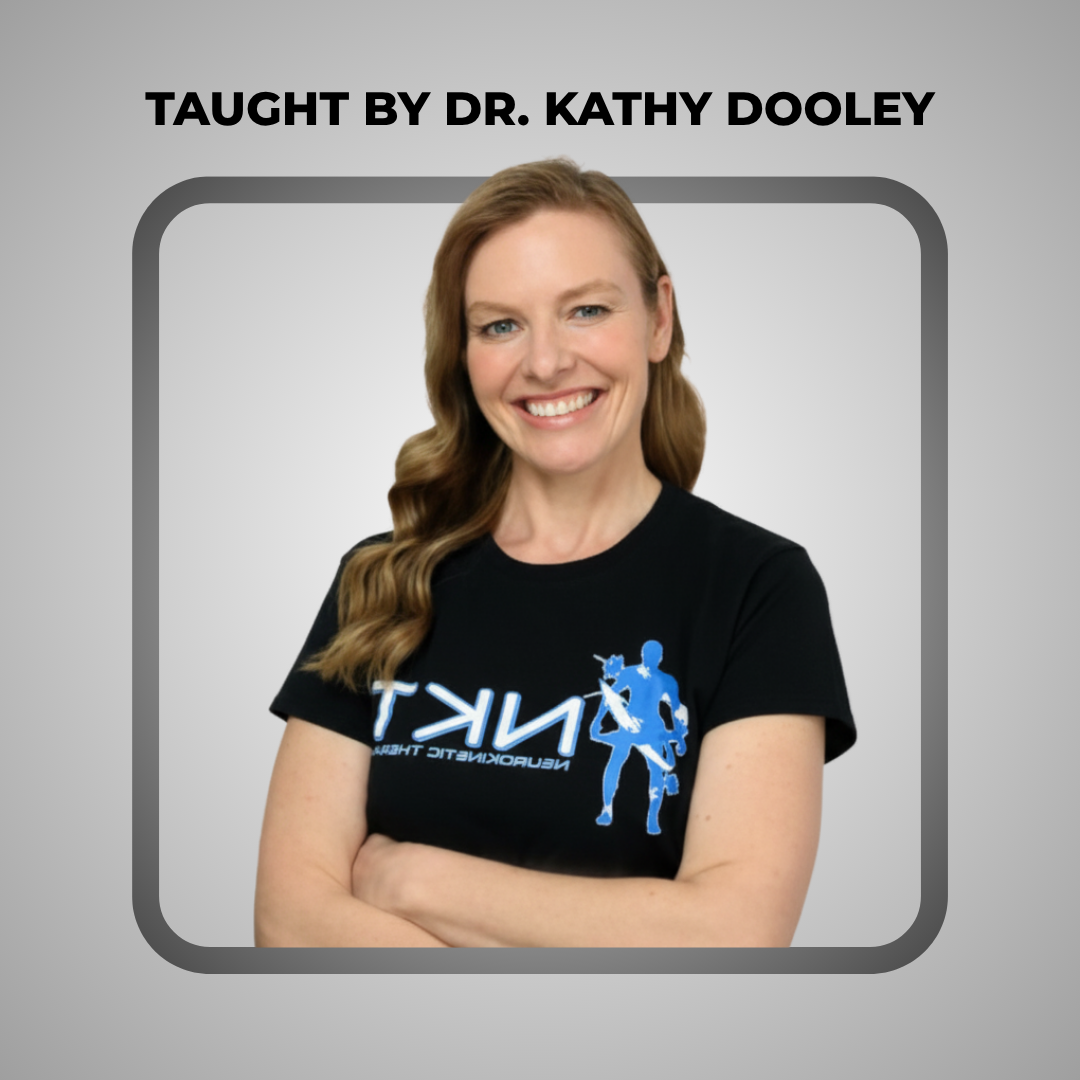
Dr. Kathy Dooley
Dr. Kathy Dooley is a rehabilitative chiropractor who uses functional anatomy and movement analysis to educate and treat her patients. She utilizes her anatomy and rehabilitative knowledge to help students, colleagues, and patients seek the sources of pain, not just the sites.
She teaches gross anatomy at five leading institutions—including Albert Einstein College of Medicine and Weill Cornell Medical College—and is the cofounder and lead instructor of Immaculate Dissection Seminars, LLC, offering both online and in-person courses on anatomy and movement. Dr. Dooley is also a worldwide lead instructor for Neurokinetic Therapy® Seminars.
A contributor to research and education, she reviews for Clinical Anatomy and shares insights on www.drdooleynoted.com. She holds a Doctor of Chiropractic degree, a Master of Science in Clinical Anatomy, and numerous movement certifications including NKT, SFMA, DNS, FMS, and SFG.
Dr. Dooley divides her time between Brooklyn, NY, and Boulder, CO, balancing her work with family life while inspiring others in the science of human movement.


