


Diagnosis and Management of Lumbar Spine Disorders
Diagnosis and Management of Lumbar Spine Disorders
Learn how to incorporate repeated movement assessment, end range loading exercises and manual therapy into clinical practice.
Couldn't load pickup availability

Venue
-
Portland, OR
February 20-21, 2027
8:00-6:00 (subject to change)
Venue: TBA
Early Bird Price Ends: January 8
Description
Spine pain has remained the leading cause of disability worldwide for decades, imposing a significant burden on both the public and healthcare systems. In response, healthcare professionals have been called upon to provide effective guidelines and treatment strategies aimed at reducing costs and improving patient outcomes. However, addressing this challenge has proven to be complex and overwhelming, with scalable, evidence-based solutions remaining elusive.
This course offers a structured and systematic approach to the assessment and management of low back and associated lower extremity pain, integrating evidence, clinical expertise, and active patient engagement. Emphasis will be placed on valid and reliable clinical assessment, classification, and decision-making using the McKenzie Method of Diagnosis and Therapy®.
Over the two-day program, participants will engage in a dynamic blend of lectures, live demonstrations, and hands-on patient assessments. The course is designed to build a strong foundational understanding and enable the immediate application of learned concepts into clinical practice.


Course Objectives
By the completion of this program, participants will:
- Understand and apply the comprehensive assessment and treatment of mechanical pain of the lumbar spine according to the McKenzie Method of Mechanical Diagnosis and Therapy (MDT)
- Be able to use a reliable assessment and match clinical options to presented cases
- Discuss, understand, and apply pain phenotyping and classification to mechanical pain presentations
- Understand classification approaches with MDT and how to properly utilize a reductive loading strategy.
- Apply knowledge regarding MDT classifications to case examples
- Understand how and when to utilize baseline assessment tools in clinic
- Apply treatment strategies for different mechanical pain classifications, and discuss the importance of patient education, word selection, goal setting, and exercise-based management.
To successfully complete this course, participants are expected to participate in the following:
-
In-depth discussions and real-world scenarios and cases
-
Practical hands-on demonstrations of assessment and treatment utilizing end-range loading strategies
-
Interactive Q&A sessions with the instructor
Who is this course for?
Practicing DC, PT, DO and other medical professionals interested in non-surgical spine care (e.g., spine surgeon, PM&R).
CE Approvals
This program, when attended in its entirety, offers 15.0 PACE CE Hours for Chiropractors.
For Full CE information please visit: https://tcsppofficeofce.com/diagnosis-and-management-of-lumbar-spine-disorders/
The Outline
15 CE Hours
Collapsible content
Day 1
8:00 - 8:30 AM Introduction and Course Overview
8:30 - 9:30 AM Natural History, Pain Mechanisms & Phenotyping
9:30 – 10:30 AM Classification Systems (MDT, TBC, PMCS)
10:30 – 10:45 AM — BREAK
10:45 AM – 12:45 PM MDT Syndromes Deep Dive
12:45 – 1:30 PM — LUNCH
1:30 – 3:00 PM LAB SESSION 1: MDT Movement Assessment
3:00 – 3:15 PM — BREAK
3:15 – 4:00 PM Clinical Decision-Making: Red/Yellow/Green Light Framework
4:00 – 5:00 PM Case Studies
5:00 – 6:00 PM Disc Mechanics & Nuclear Migration
Day 2
8:00 – 9:00 AM Advanced MDT Procedures
9:00 – 10:00 AM LAB SESSION 2: Hands-On Treatment Procedures
10:00 – 10:15 AM — BREAK
10:15 – 11:00 AM SIJ Differential Diagnosis & Laslett Cluster
11:00 AM – 12:00 PM Complex Cases & MUR Pathway
12:00 – 12:45 PM Case Studies
12:45 – 1:30 PM Return-to-Sport / Return-to-Activity Testing
1:30 – 2:00 PM Final Integration & Course Wrap-Up
Instructor

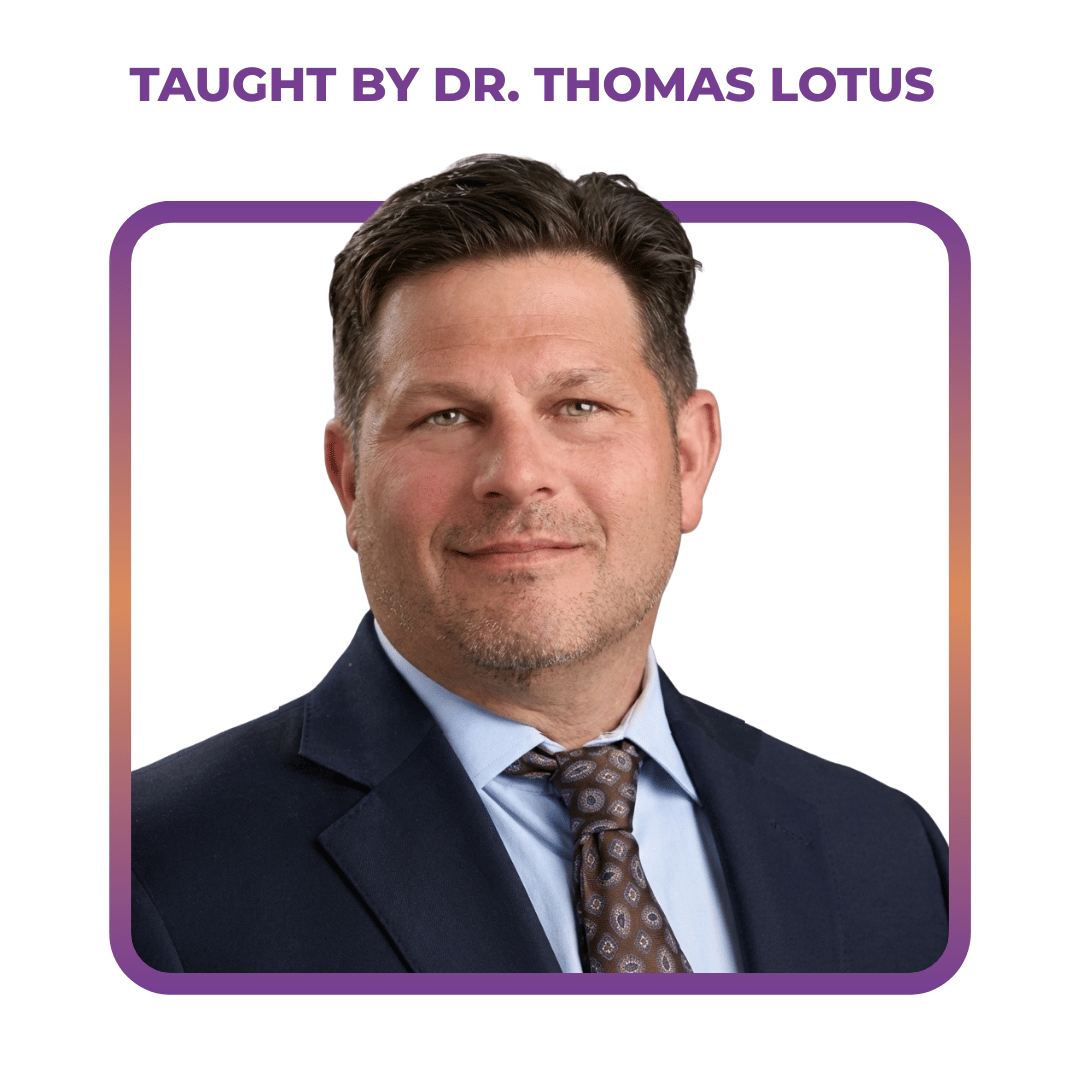
Dr. Thomas Lotus
DC, Cert.MDT, DIANM
Dr. Lotus completed his DC degree at National University of Health Sciences in 2003. He went on to earn his chiropractic orthopedics diplomate and McKenzie Diagnosis and Therapy credential and is currently completing his rehabilitation diplomate through the American Chiropractic Rehabilitation Board.
His extensive rehabilitation training includes a rotation at Motol Hospital in the Czech Republic under Drs. Pavel Kolar and Karel Lewit, where he learned advanced techniques in dynamic neuromuscular stabilization (DNS).
Dr. Lotus is currently a chiropractic physician with Midwest Orthopedics at Rusch University Medical Center and is co-director of the non-surgical spine care division. He provides patient assessment, treatment and triage service and assists orthopedic resident and fellow training in non-surgical spine care.
He is a past faculty member at the Lincoln School of Post-Professional Education, where he taught courses on pain classification, non-surgical orthopedics, rehabilitation, biomechanics, and pain management. He is currently and adjunct faculty at the School of Health and Rehabilitation Science where he provided instruction for the Primary Spine Practitioner Program.
Dr. Lotus co-authored chapter 11 on Therapeutic Exercise in the 2018 Orthopedic Knowledge Update and the chapter on The McKenzie Method of Mechanical Diagnosis and Therapy in the 3rd edition of Rehabilitation of the Spine by Craig Liebenson, DC.


